
Have you ever wondered what people on the other side of the world are eating for dinner tonight? Food is one of the most honest windows into a culture — its history, its landscape, and the people who shaped it. From the back streets of Tokyo to the bustling markets of Mexico City, every dish carries a story worth tasting.
At experience aksarabrita, we believe that exploring global foods is one of the most exciting journeys you can take — and you don’t even need a passport to start. Below, we’ve handpicked five traditional and beloved dishes from five corners of the world, along with their origins, key ingredients, and simple step-by-step recipes you can try at home.
1. Sushi — Japan 🇯🇵
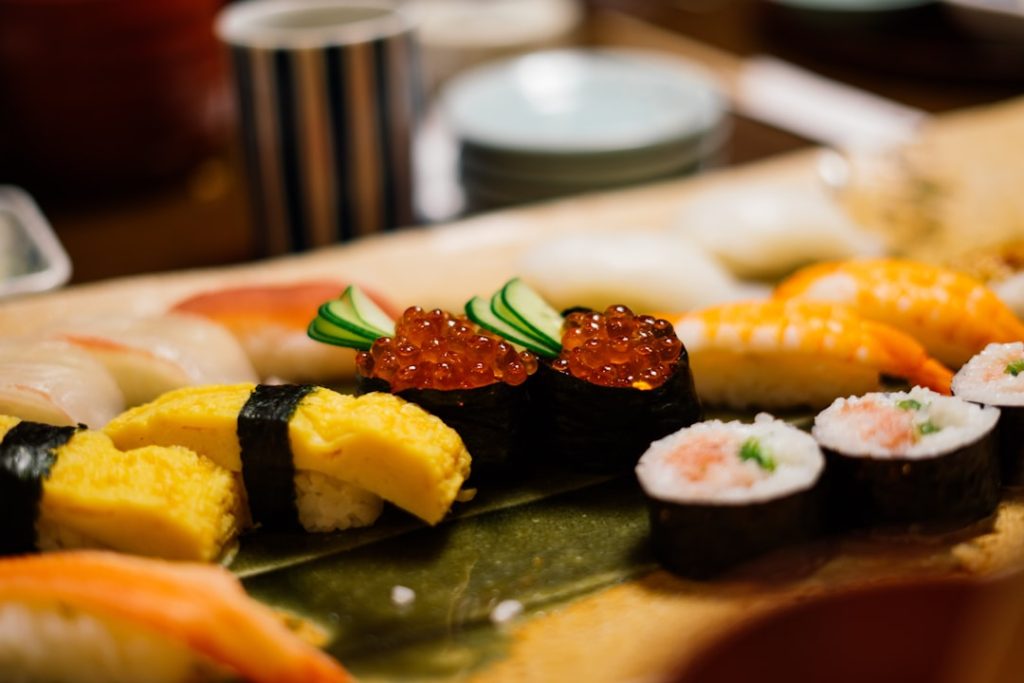
Origin
Sushi is one of the most globally recognized dishes today, yet its roots go back far beyond Japan. The earliest form of sushi, known as narezushi, originated in Southeast Asia as a method of preserving fish in fermented rice — long before anyone was eating it as a meal. It then spread to China and eventually Japan during the Yayoi period. The Japanese were the first to actually eat the rice together with the fish rather than discarding it. By the 19th century, a street-food version closer to what we know today was being sold in the Edo district of Tokyo.
Ingredients (for 2 servings)
| Ingredient | Amount |
|---|---|
| Japanese short-grain rice | 1 cup |
| Rice vinegar | 3 tbsp |
| Sugar | 1 tbsp |
| Salt | ½ tsp |
| Nori (seaweed sheets) | 2 sheets |
| Fresh salmon or tuna (sashimi grade) | 150 g |
| Cucumber (julienned) | ½ piece |
| Avocado (sliced) | ½ piece |
| Soy sauce & wasabi (to serve) | as needed |
Simple Recipe
Step 1: Cook the rice according to package instructions. While warm, fold in the rice vinegar, sugar, and salt. Let it cool to room temperature.
Step 2: Place a nori sheet on a bamboo mat (or a clean kitchen towel). Spread a thin, even layer of rice over the nori, leaving about 2 cm at the far edge.
Step 3: Lay your fish, cucumber, and avocado in a line along the near edge of the rice.
Step 4: Roll it tightly using the mat, pressing gently but firmly. Seal the edge by moistening it with a little water.
Step 5: With a sharp, wet knife, slice the roll into 6–8 pieces. Serve with soy sauce and a small dab of wasabi on the side.
Tip: The secret to good sushi rice is seasoning it while still slightly warm — it absorbs the vinegar much better that way.
2. Pasta Carbonara — Italy 🇮🇹
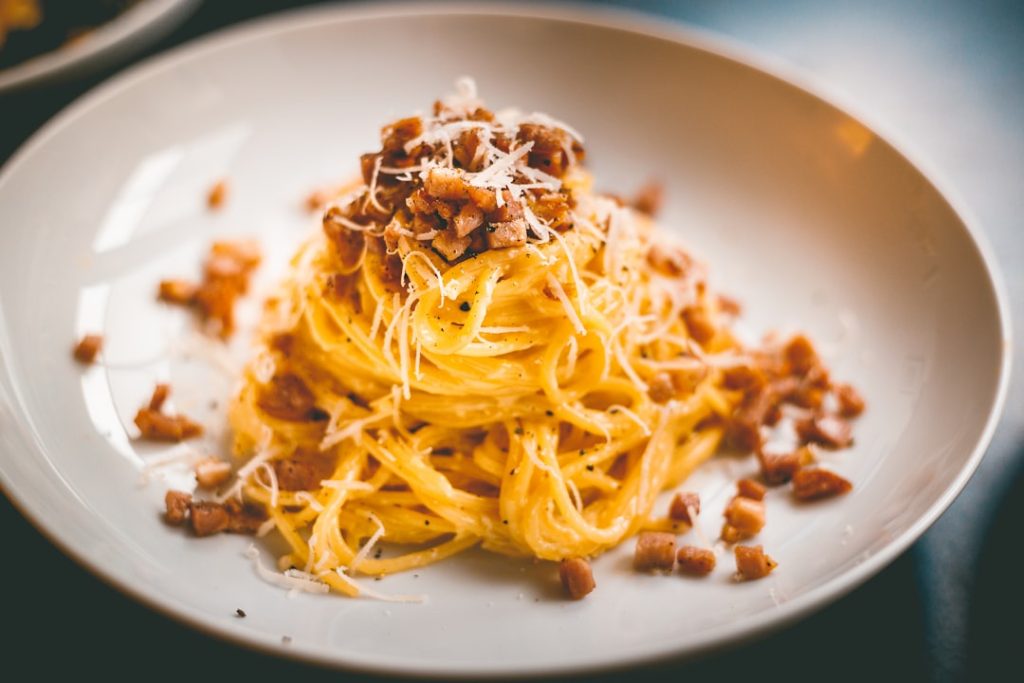
Origin
Carbonara is one of Rome’s most beloved pasta dishes, and also one of its most debated. The dish is typical of the Lazio region of Italy and took its modern form in the mid-20th century. One widely accepted theory is that it emerged when American soldiers arrived in Italy in 1943 and brought supplies of bacon and powdered eggs, which local cooks combined with pasta and local cheeses. The name carbonara comes from carbonaro, meaning “coal burner,” which hints at another theory — that it was a hearty meal made by charcoal workers in the hills of Lazio. Whatever its true origin, the dish established itself around a brilliantly simple combination of egg yolk, guanciale (cured pork cheek), Pecorino Romano, and black pepper.
Ingredients (for 2 servings)
| Ingredient | Amount |
|---|---|
| Spaghetti | 200 g |
| Guanciale or pancetta (diced) | 100 g |
| Egg yolks | 3 large |
| Pecorino Romano (grated) | 50 g |
| Black pepper (freshly ground) | 1 tsp |
| Salt (for pasta water) | to taste |
Simple Recipe
Step 1: Boil a large pot of salted water and cook the spaghetti until al dente. Reserve 1 cup of pasta cooking water before draining.
Step 2: While the pasta cooks, fry the guanciale in a pan over medium heat (no oil needed) until crispy. Remove from heat.
Step 3: In a bowl, whisk together egg yolks, grated Pecorino, and a generous amount of freshly ground black pepper.
Step 4: Add the hot drained pasta to the pan with the guanciale (heat off). Pour the egg mixture over the pasta and toss quickly, adding pasta water a splash at a time to create a silky, creamy sauce.
Step 5: Plate immediately and finish with extra Pecorino and black pepper on top.
Tip: Never add cream — authentic carbonara gets its creaminess entirely from the egg yolks and starchy pasta water. Keep the heat off when mixing to avoid scrambling the eggs.
3. Chicken Tagine — Morocco 🇲🇦
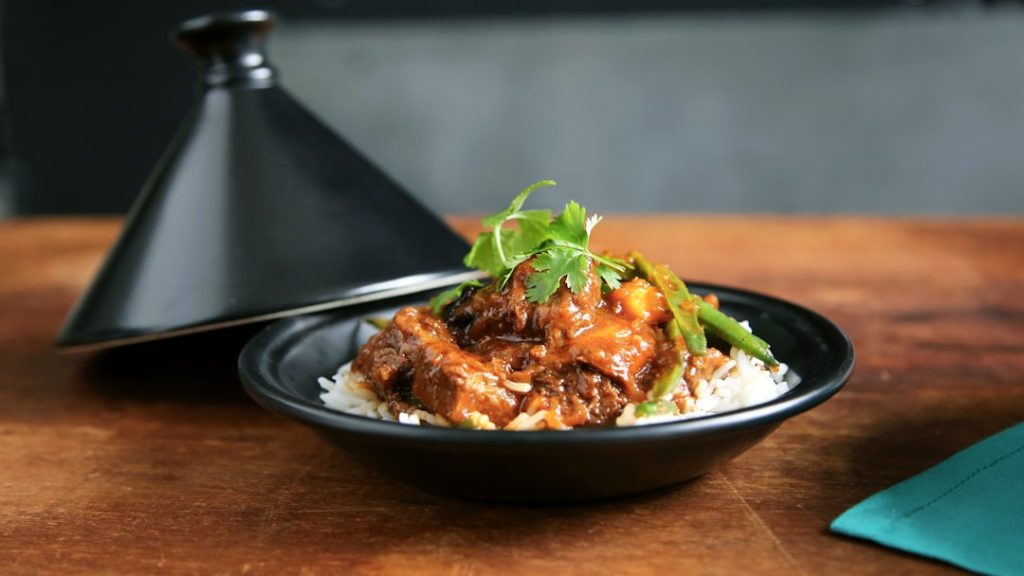
Origin
The tagine is both a dish and the unique cone-lidded earthenware pot in which it is cooked. Tagines are believed to be of nomadic Berber origin, serving as portable ovens that could be easily picked up and moved — perfectly suited to the desert lifestyle of North Africa’s earliest inhabitants. Over centuries, the dish evolved as it absorbed influences from Arab, Ottoman, Moorish, and French culinary traditions. The result is a deeply spiced, slow-cooked stew that balances savory and sweet in ways few dishes in the world do. Common spices include ginger, turmeric, cumin, cinnamon, saffron, and paprika.
Ingredients (for 3–4 servings)
| Ingredient | Amount |
|---|---|
| Chicken (bone-in pieces) | 700 g |
| Onion (sliced) | 2 medium |
| Garlic (minced) | 3 cloves |
| Olive oil | 3 tbsp |
| Ground cumin | 1 tsp |
| Ground ginger | 1 tsp |
| Turmeric | ½ tsp |
| Cinnamon | ½ tsp |
| Preserved lemon (sliced) | 1 piece |
| Green olives | ½ cup |
| Fresh cilantro & parsley | a handful |
| Salt & pepper | to taste |
Simple Recipe
Step 1: Heat olive oil in a heavy pot or Dutch oven over medium heat. Add onions and garlic and sauté until soft and golden.
Step 2: Add cumin, ginger, turmeric, and cinnamon. Stir for 1 minute until fragrant.
Step 3: Add the chicken pieces and brown on all sides. Season with salt and pepper.
Step 4: Add ½ cup of water, preserved lemon slices, and green olives. Cover tightly and simmer on low heat for 40–50 minutes until the chicken is fall-off-the-bone tender.
Step 5: Scatter fresh cilantro and parsley over the top. Serve hot with flatbread or couscous.
Tip: The magic of tagine is in the slow cook. Don’t rush it — the longer it simmers, the more the spices meld into something extraordinary.
4. Butter Chicken — India 🇮🇳
Origin
Butter chicken — or murgh makhani — is arguably the most famous Indian curry in the world, yet it has a surprisingly humble and accidental origin. The dish started life as a way of repurposing leftovers at the iconic Moti Mahal restaurant in Old Delhi in the 1950s. Chef Kundan Lal Gujral reportedly didn’t want leftover tandoori chicken to go to waste, so he simmered it in a sauce of tomatoes, butter, and cream — and the result was revolutionary. The dish quickly captivated a host of high-profile admirers and has since become a fixture on Indian restaurant menus worldwide.
Ingredients (for 3–4 servings)
| Ingredient | Amount |
|---|---|
| Chicken breast or thigh (cubed) | 500 g |
| Plain yogurt | ½ cup |
| Garam masala | 2 tsp |
| Ground cumin | 1 tsp |
| Turmeric | ½ tsp |
| Chili powder (mild) | 1 tsp |
| Butter | 3 tbsp |
| Garlic & ginger paste | 1 tbsp each |
| Canned crushed tomatoes | 400 g |
| Heavy cream | ½ cup |
| Kasuri methi (dried fenugreek leaves) | 1 tsp |
| Salt | to taste |
Simple Recipe
Step 1: Mix the chicken with yogurt, half the garam masala, cumin, turmeric, chili powder, and a pinch of salt. Marinate for at least 30 minutes (or overnight for best results).
Step 2: Cook the marinated chicken in a hot pan or grill until lightly charred. Set aside.
Step 3: In the same pan, melt butter over medium heat. Add garlic and ginger paste, stir for 1–2 minutes until golden and fragrant.
Step 4: Add crushed tomatoes and the remaining garam masala. Simmer for 10 minutes. Blend the sauce until smooth if you prefer a silky texture.
Step 5: Add the cooked chicken back into the sauce along with the heavy cream and kasuri methi. Simmer for another 10 minutes. Serve with naan or basmati rice.
Tip: Kasuri methi (dried fenugreek leaves) is the secret flavor behind that unmistakable restaurant-style aroma. Don’t skip it!
5. Tacos — Mexico 🇲🇽
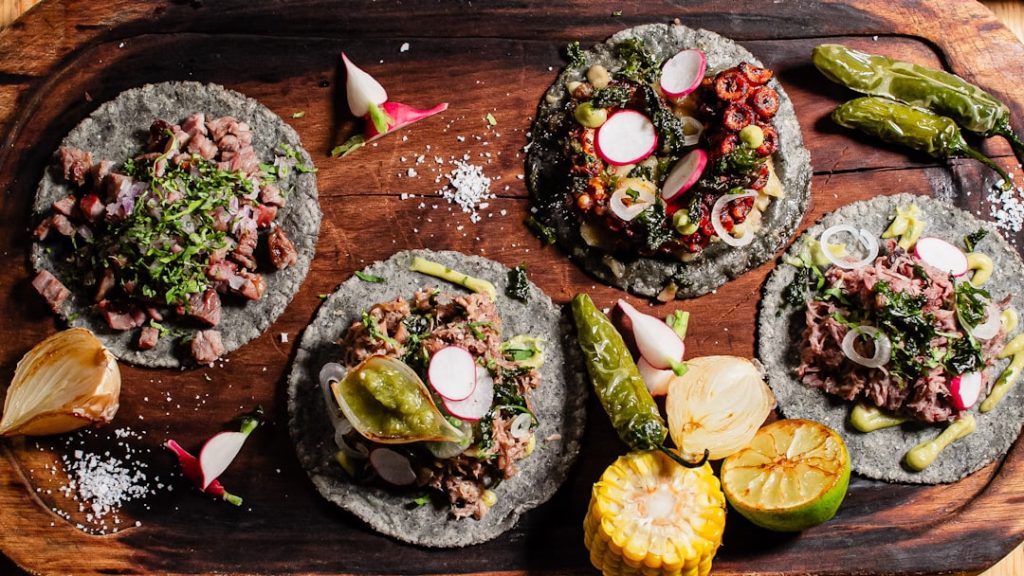
Origin
Few foods are as instantly recognizable — or as joyfully eaten — as the taco. The taco is an internationally popular hand-sized food of Mexican origin, built around a corn or flour tortilla filled with seasoned meat, vegetables, and sauces. Maize has been domesticated in Mexico for at least 9,000 years, and the tortilla is one of its earliest uses. Over time, the taco absorbed Spanish, African, and indigenous influences, evolving into the culturally rich dish we know today. From street stalls in Mexico City to dinner tables around the globe, the taco remains a symbol of sharing and community.
Ingredients (for 2 servings / 4–6 tacos)
| Ingredient | Amount |
|---|---|
| Corn tortillas (small) | 6 pieces |
| Chicken thigh or beef (thinly sliced) | 300 g |
| Lime juice | 2 tbsp |
| Chili powder | 1 tsp |
| Cumin | 1 tsp |
| Garlic powder | ½ tsp |
| Olive oil | 1 tbsp |
| Onion (finely chopped) | ½ cup |
| Fresh cilantro | a handful |
| Salsa or fresh tomato | ½ cup |
| Avocado or guacamole | ½ piece / to taste |
Simple Recipe
Step 1: Mix the sliced meat with lime juice, chili powder, cumin, garlic powder, olive oil, and a pinch of salt. Marinate for 15–30 minutes.
Step 2: Cook the marinated meat in a hot skillet over high heat for 5–7 minutes until nicely charred at the edges. Slice into smaller pieces if needed.
Step 3: Warm the corn tortillas in a dry pan for about 30 seconds on each side, or directly over a flame for a touch of char.
Step 4: Assemble your tacos: tortilla → meat → chopped onion → cilantro → salsa → avocado. Squeeze fresh lime over the top.
Step 5: Serve immediately. Traditional street-style tacos are kept simple — the quality of the tortilla and the seasoning of the meat do all the work.
Tip: Double up on tortillas (two per taco) like Mexican street vendors do — it stops the filling from breaking through and makes every bite more satisfying.
Ready to Cook the World?
Each of these dishes carries centuries of culture, creativity, and community in every bite. The best part? You don’t need a chef’s kitchen to pull them off — just good ingredients, a little patience, and the curiosity to try something new.
Have you tried cooking any of these dishes at home? Which one is next on your list? Share your experience in the comments below — we’d love to hear how it goes. And if you’re hungry for more food stories and travel inspiration, keep exploring with experience aksarabrita.
Frequently Asked Questions
What is the oldest traditional dish featured in this article?
Sushi has the longest recorded history. Its earliest form, narezushi, originated in Southeast Asia as a fish preservation method and has been traced back thousands of years, eventually making its way to Japan.
Can I make these dishes without special equipment?
Yes. Most of these recipes use standard home kitchen tools. Sushi is easiest with a bamboo mat, but a kitchen towel works too. Tagine can be made in a Dutch oven or heavy pot instead of a traditional clay tagine pot.
Which dish is the easiest for beginners?
Tacos and pasta carbonara are the most beginner-friendly. Tacos require minimal prep and very little cooking time, while carbonara uses just five ingredients and no special technique beyond keeping the heat low when mixing.
Is authentic carbonara made with cream?
No. Authentic Roman carbonara uses only egg yolks, guanciale (or pancetta), Pecorino Romano cheese, and black pepper. The creamy texture comes entirely from the emulsification of egg yolks with starchy pasta water.
What makes butter chicken different from other Indian curries?
Butter chicken, or murgh makhani, is milder and creamier than most Indian curries. Its sauce is built on tomatoes, butter, and cream rather than spicy chilies, and it was originally created to repurpose leftover tandoori chicken.